Building Communication Skills
As students gain confidence in their abilities and a clearer understanding of themselves, they will inherently become more in touch with their thoughts and feelings. For some, communication skills develop naturally and quickly once a sense of self-confidence is established--but this is not the case for all adolescents. By consciously imbedding opportunities for students to practice their communication skills, grade 8 teachers are empowering students with a tool that is critical to building relationships with others and finding a sense of belonging in their new school.
Strategy 1: Create opportunities for practicing "IRL" Communication Skills
WHY?
Pre-teens and teenagers tend to spend increasing amounts of time communicating with others in virtual spaces. The classroom may include technology but it is a very real, tangible physical space that many students are uncomfortable communicating in. Teachers can create many informal and formal opportunities for students to practice their oral communication skills and ease student concerns about speaking their minds or sharing their feelings.


How?
1) Partner--> Group--> Class Discussions: By beginning with a partner share and then moving to a group discussion, students gain increasing comfort and familiarity with discussion expectations. Buzz Groups, Circles of Voices, and Snowball Groups are fun suggestions from the University of Waterloo website which can help teachers diversify small group discussion formats.
2) Debates: Debates are a great way for students to express their opinions and try to learn argumentation skills. Formal debates such as this one from a Social Studies course are one option. More informal formats, such as Facing History's Barometer Activity, allow students to ease into debating with a greater focus on self-reflection.
3) Online and Silent Debates: Platforms such as Kialo Edu allow students to ease into debating . Silent Debates can encourage widespread student buy-in as this debate style tends to alleviate any fears of public speaking (though scribes may be needed for students with written output struggles).
Strategy 2:
Integrating Indigenous Ways of Knowing through Talking Circles
WHY?
Collaborative teaching strategies “develop teamwork and pride in group accomplishments,” and
“stories, sharing, and talking circles” help students find their voices and build new relationships
(Restoule and Chaw-win-is, 2017, p.13).
Talking circles are a readily accessible teaching strategy that enables all educators to begin integrating Indigenous perspectives in their classrooms and to start building their own confidence in doing so, one circle at a time. Moreover, the nature of talking circles is inherently collaborative and relational which creates a safe space as students are encouraged to use their voice and speak their truths. In sum, talking circles foster more inclusive classrooms which in turn facilitates greater student engagement—a necessary precursor to improving overall student achievement.
How?
A pedagogical talking circle is a teaching strategy grounded in Indigenous relational approaches,” but it is not specific to a culture, tied to a ceremony, or part of sacred knowledge (Barkaskas & Gladwin, 2021, p. 22). The three fundamental approaches that must form the framework of pedagogical talking circles are: situated relatedness, respectful listening, and reflective witnessing. Situated relatedness asks each participant to “consider the relationships people have to the lands they occupy and live on, the people with whom they have relations, and their personal histories” (Barkaskas & Gladwin, 2021, p.21). Respectful listening is inherently important to the relational aspect of talking circles, and it also serves to support holistic learning and growth. Relative witnessing, the third component, must be modelled by the facilitator who asks participants to “agree that they will avoid responding directly through confrontation to experiences or reflections of others” and “instead focus on their own experiences” through critical self-reflection (reflective witnessing) (Barkaskas & Gladwin, 2021, p.31). To remind students of these promises, Barkaskas and Gladwin recommend using a talking object that is linked to the land or world outside.

Strategy 3:
Playing with Room Arrangement
WHY?
The more students can learn to work with new people and become familiar with initiating conversations, the easier it will be to engage in the collaborative learning that characterizes Project Based Learning.
How?
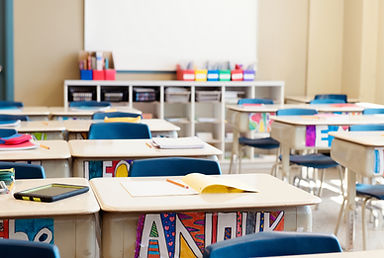
A guided release (or catch and release) model is a great way to approach room arrangement and enable organic relationship building. For example, in the first term of grade 8, the seating plan can be determined solely by the teacher; in term 2, some self-selected seating can be permitted (i.e. every student gets to have someone at their table group that they self selected as familiar). If the first two terms go well, free seating can be tried in term 3. With each seating move, teachers can give a 'getting to know you' activity between new seatmates or a 'group challenge' activity such as one of the many fun ones described in this resource from Cornell University.
Changing desk configurations (i.e. pods vs pairs vs rows) and conducting some classes with temporary formations (i.e. the Barometer Activity described earlier) ensures students will be interacting with new people they may not typically strike a conversation with. This video from Educational Partners International and this video from Teachings in Educations discuss the pros and cons of various desk arrangement formats. A key takeaway is that teacher flexibility is essential--if your activity necessitates a different layout, remind yourself it is worth the effort to move the furniture in your classroom for the sake of shaping the minds that sit on it.